Organizing Your Home: The Complete Room-by-Room Guide for Busy Moms
Organizing your home can transform your living space — making it more functional, calmer, and genuinely easier to live in, especially when you’re juggling little ones, work, and everything in between. Whether you’re tackling a full-house overhaul, setting up systems around a new baby, or just trying to reclaim your kitchen counters, a structured plan makes the whole process manageable instead of overwhelming.
This guide is the hub for everything home organization on Digital Moms Life. It walks you through the complete system — planning, decluttering, storage, room-by-room zones, and the daily habits that keep it all working — with links out to our deeper guides on each topic as you go.
1. Start With a Plan That Survives Real Life
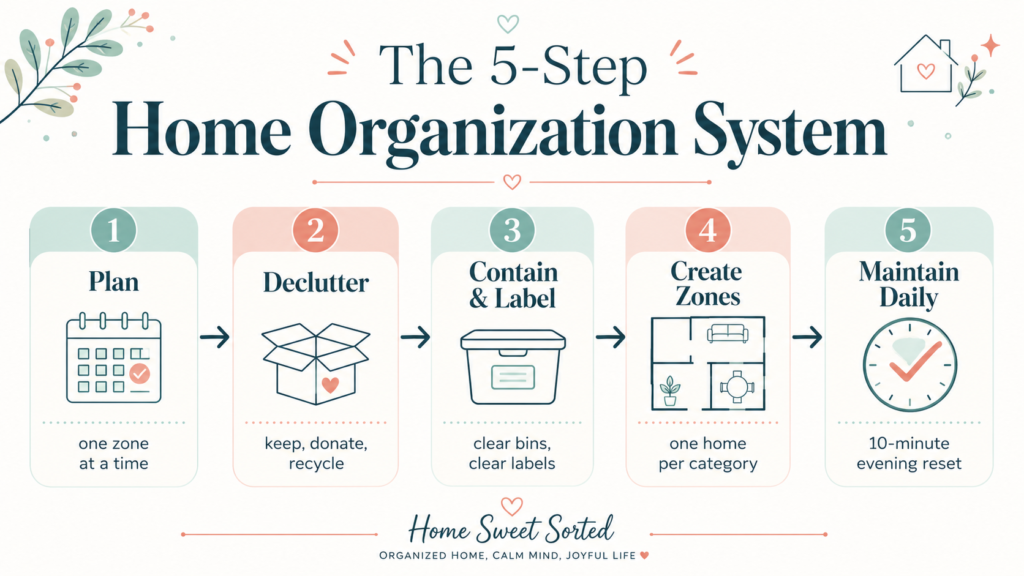
Before you buy a single bin, walk through your home and assess each room. Make a list of the areas that need attention and rank them by two things: how much the mess is costing you daily (the kitchen you use ten times a day beats the guest room), and how long each job will realistically take.
Then break it into nap-sized chunks. If you’re organizing with a baby or toddler in the house, “I’ll do the whole kitchen Saturday” rarely happens. “I’ll do the tupperware drawer during Tuesday’s nap” actually does. Spread tasks over a few weeks in your planner or phone, and treat any finished zone as a win.
Grab your free
Chore Chart printable
Turn everyday jobs into a star-earning game the kids actually want to do. Pop your email in and it lands straight in your inbox, plus weekly home-organisation tips for busy moms.
No spam, ever. Unsubscribe anytime.
A few planning rules that make everything easier:
- One zone at a time. Half-organized everywhere feels worse than one finished drawer.
- Photograph your problem areas first. Before-and-after photos are surprisingly motivating (and great if you ever want to share your progress).
- Schedule the donation drop-off at the same time you schedule the declutter. Bags of “to donate” living in your hallway for six weeks is just relocated clutter.
2. Declutter First — Always
Decluttering is the single most important step. Storage solutions organize what you own; decluttering decides what deserves space in your home at all.
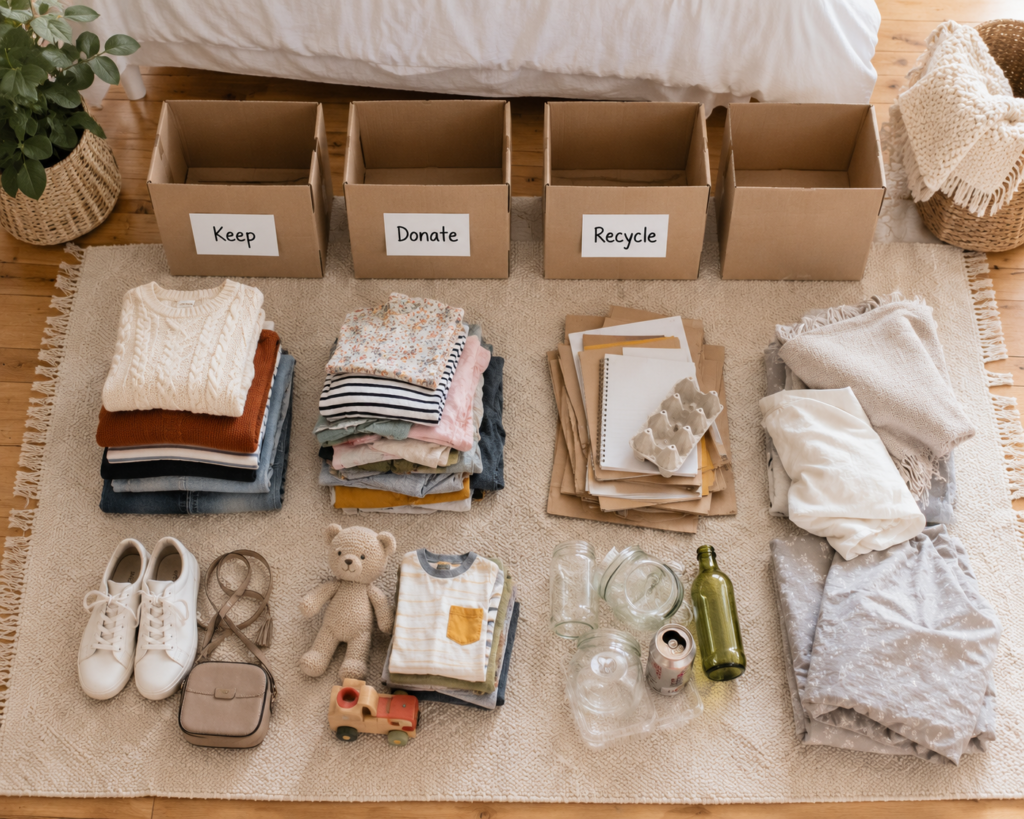
Go room by room and sort everything into four categories: keep, donate, recycle, discard. Be honest about whether you actually use each item — the “would I buy this again today?” test cuts through sentimentality fast. For kids’ things, sort when they’re not watching (you know how that goes), and keep a small memory box per child for the genuinely precious pieces.
If you want the full breakdown for every space in the house — including the tricky ones like the garage, linen cupboard, and that one drawer — we’ve written a complete companion guide: Decluttering Tips for Every Room in Your House → internal link.
3. Storage Solutions That Actually Work
Once you’ve decluttered, invest in storage that fits your space and your stage of life. A few workhorses that earn their keep in a family home:
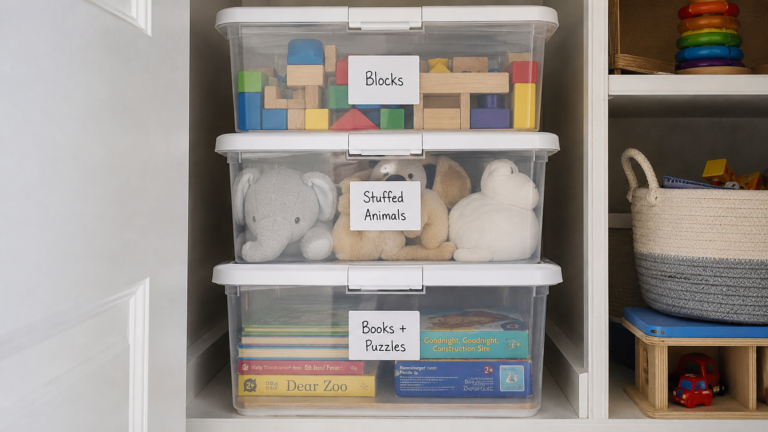
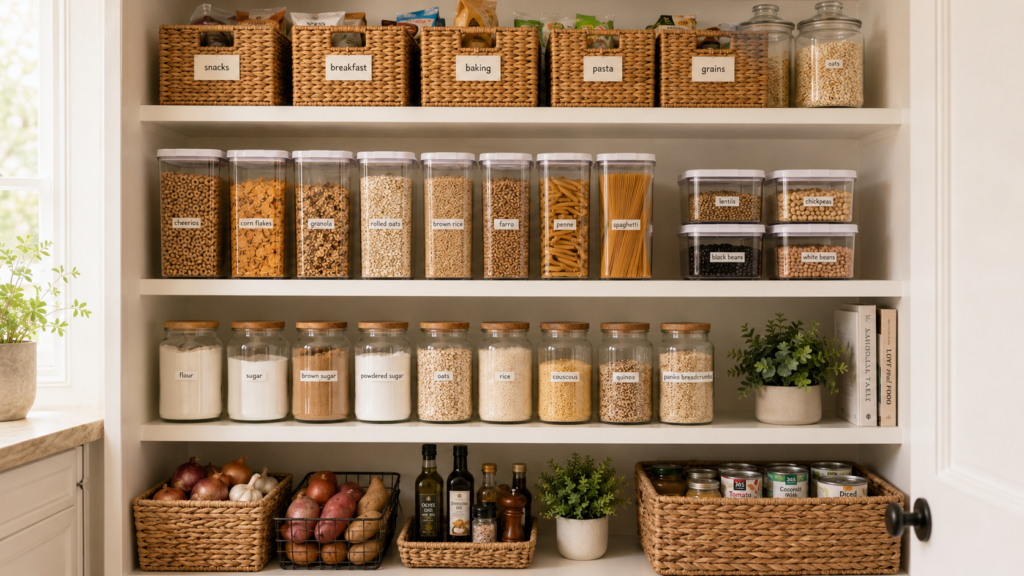
- Clear, stackable bins — being able to see what’s inside matters more than matching aesthetics, especially for kids’ items.
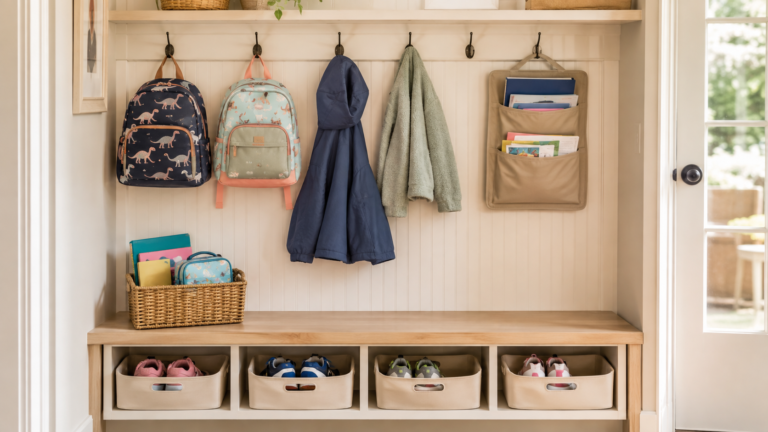
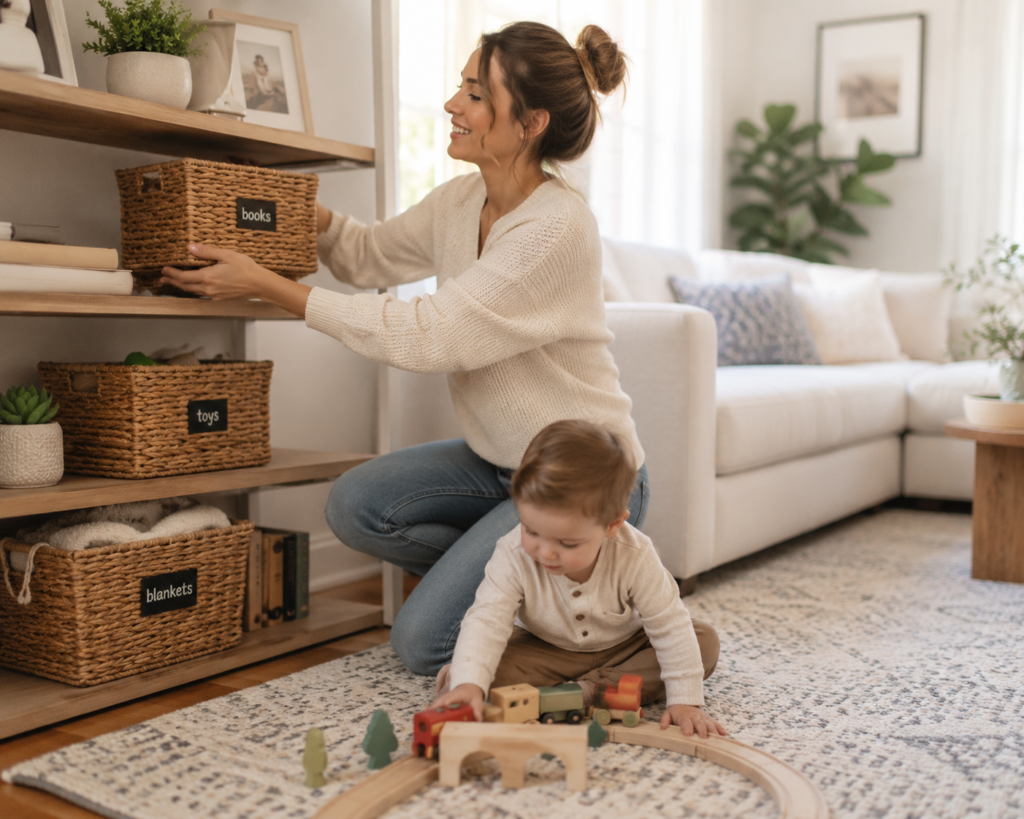
- Labeled baskets for the drop-and-go categories: hats and gloves, chargers, library books.
- A label maker or printable labels — labels are what turn “a bin of stuff” into a system the whole family can follow.
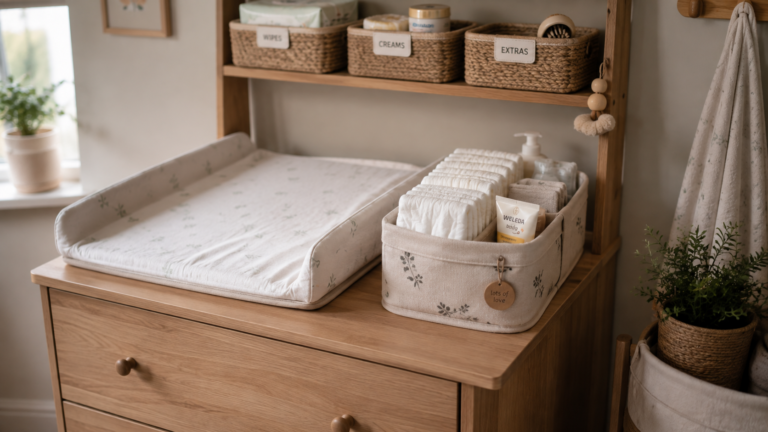
- Over-the-door organizers for shoes, cleaning supplies, craft materials, or nappy-changing supplies.
- Under-bed storage bins for out-of-season clothes and outgrown-but-keeping baby clothes.
- Shelving, hooks, and pegboards to take storage vertical — the most under-used space in most homes is the walls.
The rule: declutter first, measure second, buy third. Bins bought before decluttering usually become clutter themselves.
4. Organize by Category, Then Assign Zones
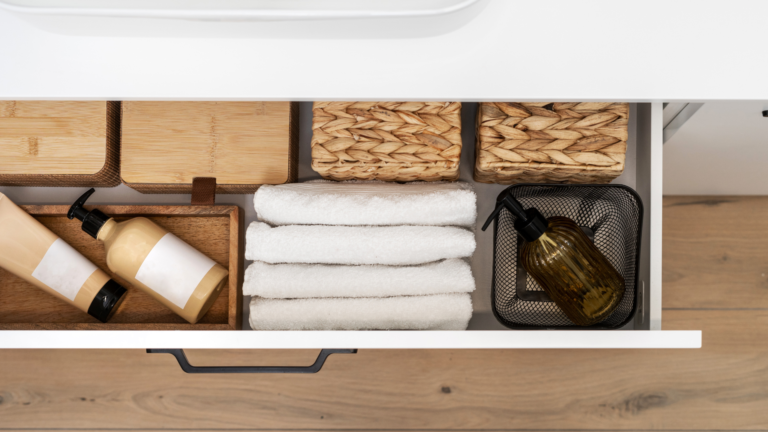
Instead of thinking purely room by room, group similar items together and give each category one home: all cleaning supplies in one spot, all craft materials in one spot, all paperwork in one spot. Then assign that category a zone — a specific shelf, drawer, or basket.
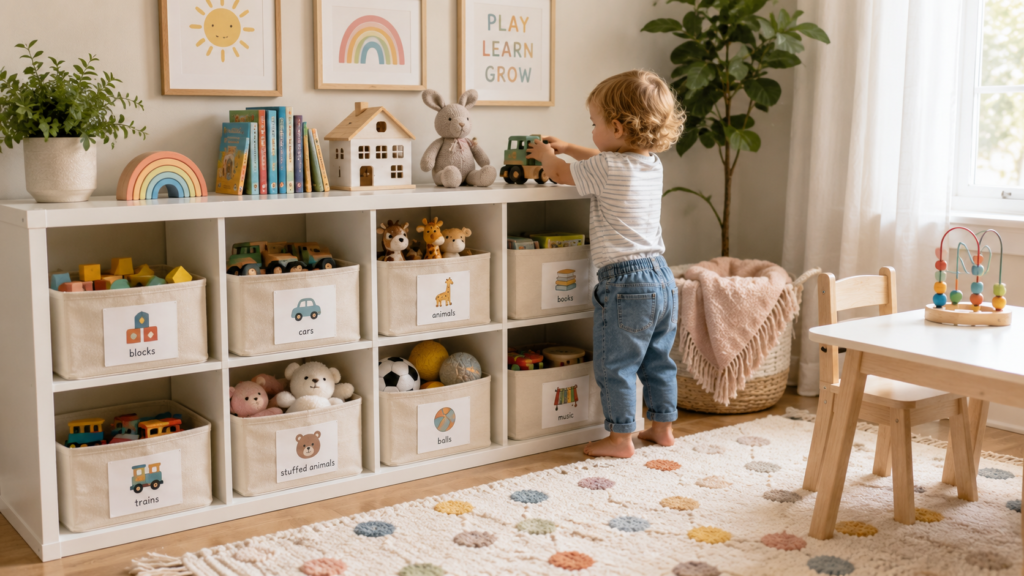
Zones are what make an organized home stay organized with kids in it, because “put it back in the toy zone” is an instruction a three-year-old can follow. “Put it away properly” is not.
5. Room-by-Room: Where to Focus
The Kitchen
The kitchen is command central, so start here. Set up zones for prep, cooking, and a coffee/breakfast station. Decant pantry staples into clear containers (affiliate link), and keep a running shopping list on the fridge or in your phone.
Two guides take this much further:
- 10 Essential Tips for Efficient and Effective Grocery Shopping — how to shop so the pantry stays organized
- Meal Prepping Magic: Prepping Dinners for Busy Moms — the system that makes 5pm survivable
The Playroom (or Play Corner)
Toy organization has one golden rule: less out, more rotated. Keep a portion of toys accessible and store the rest, swapping every few weeks — kids play more deeply with fewer options, and tidy-up takes minutes instead of meltdowns. Low, open shelving and picture labels let even toddlers put things back themselves.
Setting up from scratch? Read Setting Up a Well Designed Playroom for the full layout guide.
Family Photos and Memories
Digital clutter counts too. Thousands of photos scattered across two phones and a laptop is its own kind of mess. Our guide Don’t Let Your Memories Fade covers a simple system for backing up, sorting, and actually enjoying your family photos.
Your Work-From-Home Corner
If you work from home — even from the kitchen table — a defined, organized workspace protects both your focus and your sanity. See Work from Home Hacks for Digital Moms for setting up a workspace that can be packed away by dinnertime.
Small Spaces, Rentals, and Every Nook and Cranny
No spare room? No problem. Use under-bed bins, over-the-door organizers, corner shelves, storage ottomans, and the backs of cupboard doors. In rentals, lean on freestanding and removable solutions — tension rods, adhesive hooks, and cube shelving — so your deposit stays intact. Think of every awkward gap as free real estate.
6. Establish Daily Habits (This Is the Whole Game)
An organized home isn’t a project you finish; it’s a set of tiny habits:
- The one-touch rule: when you put something down, put it in its zone, not “somewhere for now.”
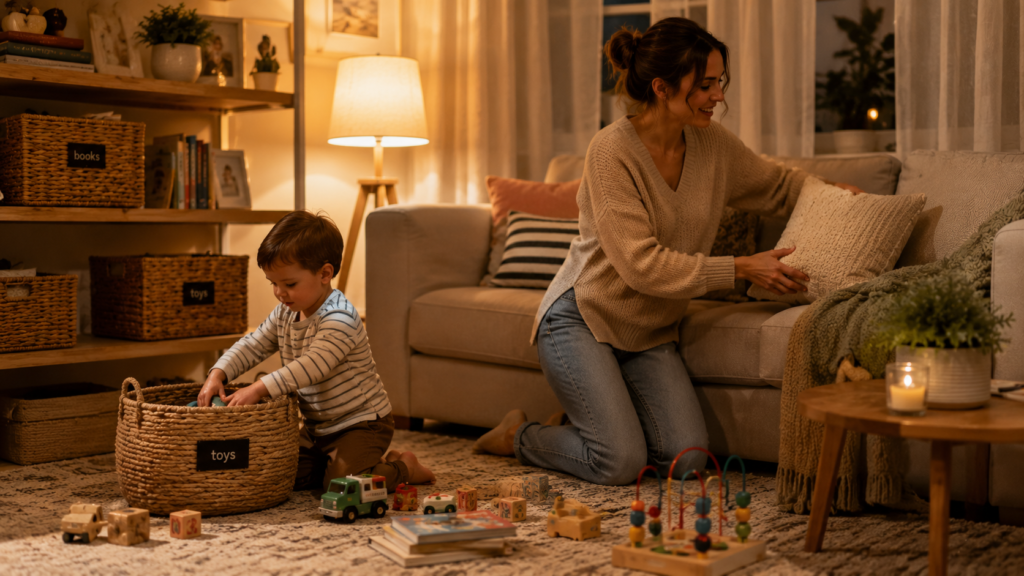
- The 10-minute evening reset: one quick lap of the main living areas before bed — everyone participates, even the small people, even badly.
- Beds made, counters cleared each morning. Two minutes, disproportionate payoff.
- One in, one out for toys and clothes, especially after birthdays and Christmas.
- A donation basket that lives somewhere permanent, so decluttering becomes a drip rather than a crisis.
7. Seasonal Resets
Twice a year, do a lighter version of the full process — declutter, rotate, refresh. It’s the natural moment to swap wardrobes, rotate toys, and update your decor:
- A Fresh Approach to Spring Home Decor for the spring reset
- Simple Ways to Make Your Home Cozy for Winter for the autumn/winter one
8. Reevaluate and Adjust
Your systems should change as your family does. The nappy station becomes a craft cupboard; the toy zone becomes a homework station. Every few months, notice which zones keep breaking down — a system that constantly fails isn’t a discipline problem, it’s a design problem. Move it, shrink it, or simplify it.
Free Printables to Get You Started
To make this easier, we’ve turned the systems in this guide into printables you can stick on the fridge today:
- Weekly cleaning schedule
- Meal planner and shopping list
- Kids’ chore chart
- Declutter checklist, room by room
Organizing your home with young kids in it can feel like brushing your teeth while eating biscuits — but with a plan, a proper declutter, and a handful of daily habits, it genuinely sticks. Start with one drawer during one nap, and build from there. Your future 5pm self will thank you.