Toy Rotation & Decluttering with a Toddler
If your living room floor currently looks like a toy shop exploded on it, you’re not alone — and you’re not failing. Toddlers come with an astonishing amount of stuff, and the stuff multiplies. Birthdays, Christmas, well-meaning grandparents, that impulse buy in the supermarket queue… it adds up fast.
Here’s the counterintuitive truth: the more toys your toddler has out, the less they actually play. Research on toddler play consistently shows that fewer available toys leads to longer, deeper, more creative play sessions. A toddler faced with thirty options flits between them. A toddler faced with eight settles in.
That’s where toy rotation comes in. It’s the single most effective home organisation system I know for families with little ones — and it costs almost nothing to set up. This guide walks you through decluttering first (the essential step everyone skips), then setting up a toy rotation for toddlers that you can maintain in ten minutes a week.
Why toy rotation works (for them and you)
Toy rotation means keeping only a small selection of toys accessible, storing the rest out of sight, and swapping them on a regular schedule. The benefits stack up quickly:
Grab your free
Chore Chart printable
Turn everyday jobs into a star-earning game the kids actually want to do. Pop your email in and it lands straight in your inbox, plus weekly home-organisation tips for busy moms.
No spam, ever. Unsubscribe anytime.
- Deeper play. With fewer choices, toddlers engage longer with each toy, which is exactly the kind of focused play that builds attention span.
- “New toy” excitement without buying anything. When the dinosaurs come back out after three weeks away, they’re greeted like long-lost friends. It genuinely feels like Christmas morning — for free.
- Tidy-up takes minutes, not an hour. Eight toys go back on a shelf fast. Fifty toys is a project.
- You can see what they actually love. Rotation reveals which toys never get touched no matter how “fresh” they are — those are your declutter candidates.
Step 1: Declutter before you rotate
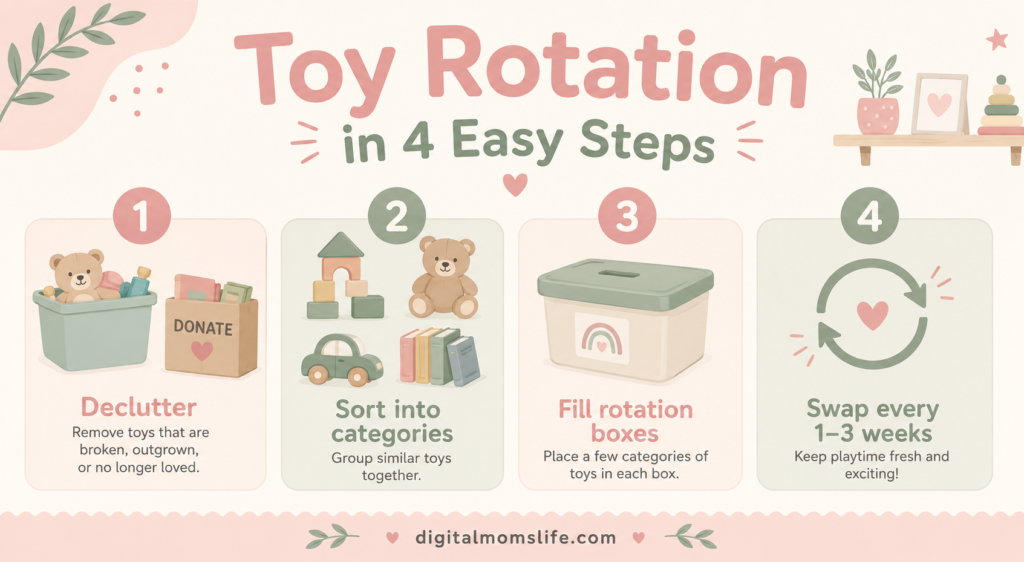
Don’t skip this. Rotating clutter just gives you organised clutter. Grab three boxes or bags — Keep, Donate, Bin — and work through everything while your toddler naps or is out of the house (trust me on this; the broken toy they haven’t looked at in six months becomes their most treasured possession the moment it’s heading for the door).

Be honest and be ruthless with:
- Broken toys and toys with missing pieces. A puzzle with four missing pieces isn’t a puzzle, it’s frustration in a box. Bin it.
- Outgrown baby toys. The activity gym and the rattles have done their job. Donate, sell, or store them if another baby might be on the cards.
- Duplicates. Nobody needs four shape sorters.
- Toys they’ve never loved. You know the ones. It’s okay — someone else’s toddler will adore them.
- Loud toys you secretly hate. You live here too. Quietly rehoming the siren fire engine is an act of self-care.
A good rule of thumb: if you’re left with more toys than would fit in your storage after this pass, go through it again. Most families can happily halve their toy collection and no toddler ever notices the difference.
If you’re in a full-house declutter mood after this, my room-by-room decluttering guide picks up where this leaves off.
Step 2: Sort what’s left into categories
Toy rotation works best when each rotation is a balanced “menu” rather than a random grab. Sort your keep pile into roughly these groups:
- Building & construction — blocks, Duplo, stacking cups, magnetic tiles
- Pretend play — play kitchen bits, dolls, animal figures, dress-up
- Books — rotate these too; it transforms bedtime
- Puzzles & problem-solving — shape sorters, chunky puzzles, posting toys
- Movement & active — balls, push toys, tunnels
- Creative — crayons, playdough, stickers (supervised stuff can live up high)
- Anchor toys — the one or two comfort favourites that never rotate. The beloved bunny or the little car that goes everywhere stays out permanently. Rotating a comfort object causes meltdowns, not magic.
Step 3: Set up your rotation boxes
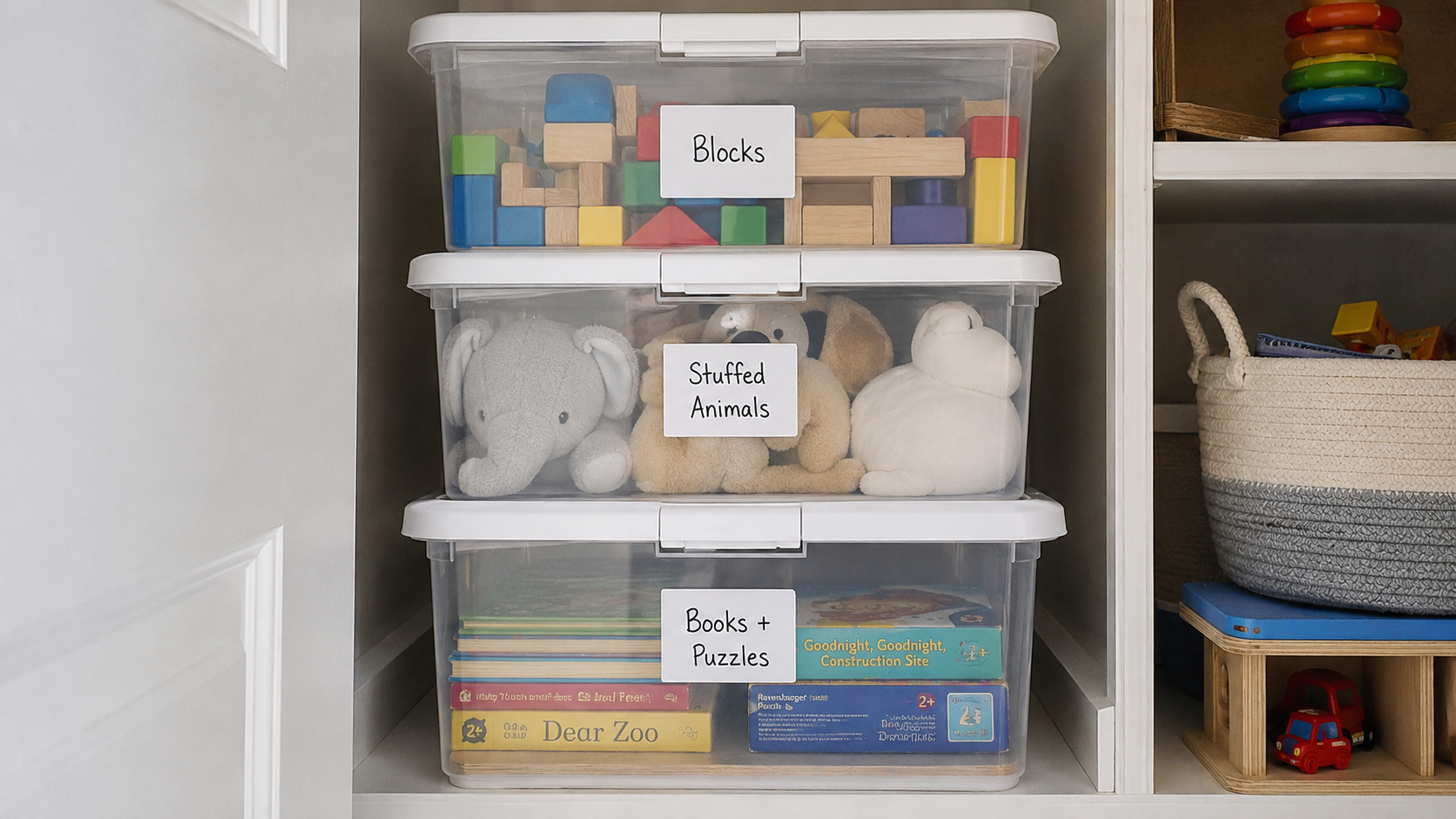
You need one accessible toy area and two to four storage boxes hidden away — under a bed, on a high wardrobe shelf, in the garage. Clear plastic boxes with lids are ideal because you can see what’s inside at a glance, but any lidded box works.
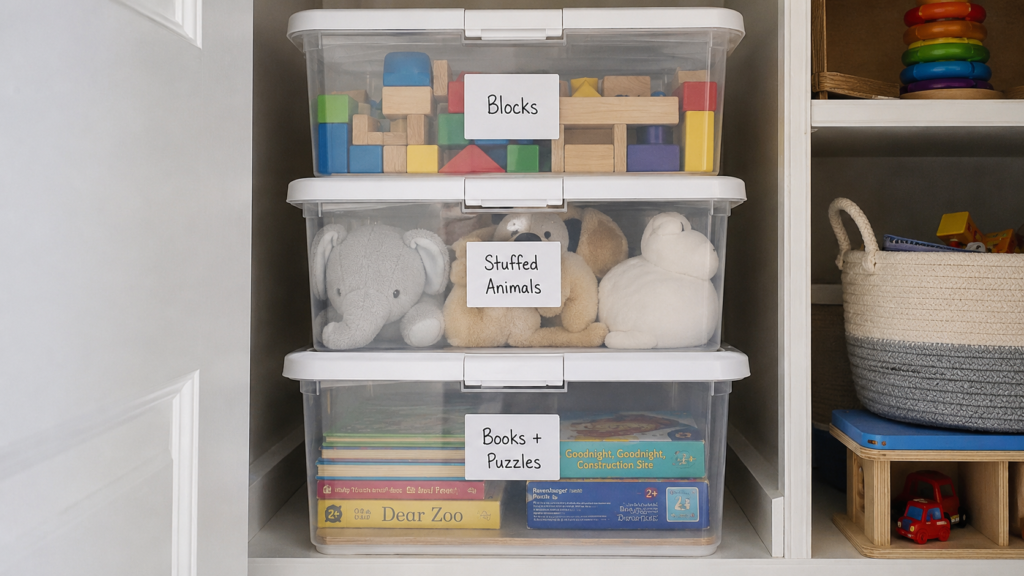
Build each box like a menu: one or two toys from each category, so every rotation has building, pretend, puzzle, movement, and creative options in it. Label the boxes (Box 1, 2, 3 — nothing fancy) and you’re done.
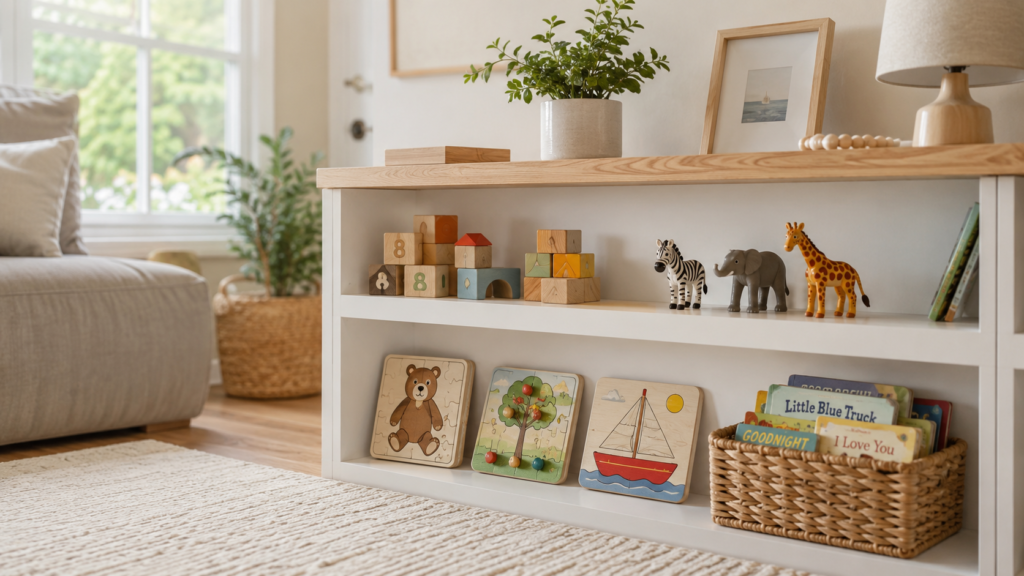
What stays out at any one time: around 8–12 toys plus the anchor toys and a small basket of books. If that sounds shockingly low, try it for one week before you judge it. This is the step that transforms playtime.
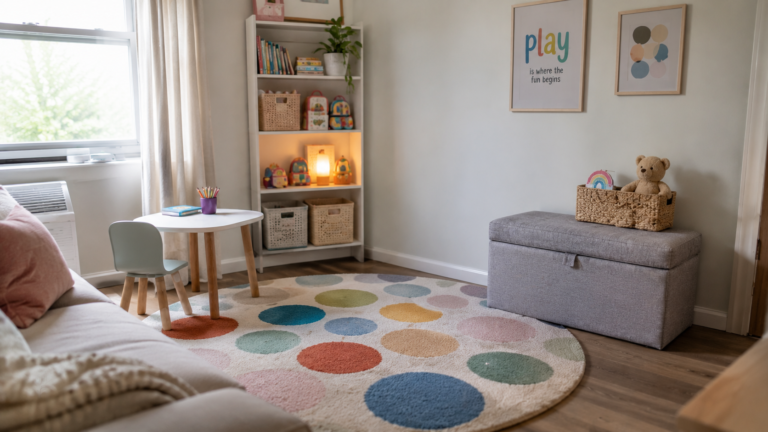
(For how to arrange the “out” toys so your toddler can actually see and reach them, my playroom setup guide covers open shelving and toddler-height storage.
Step 4: Rotate — and keep it lazy
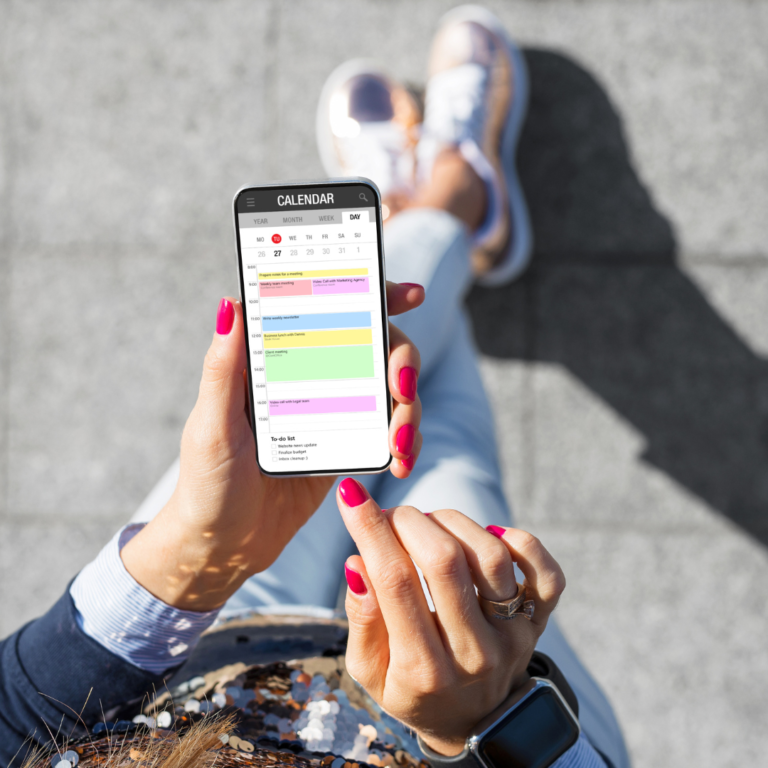
Swap the toys every one to three weeks. Honestly? Whenever you notice play going stale or the whining ramping up, that’s your cue. Put a recurring reminder in your phone for Sunday evening if you like systems, or just wing it if you don’t.
The swap takes ten minutes: out-toys go into the empty box, next box’s toys come out onto the shelf. Do it after bedtime and enjoy the “WOW!” the next morning. That reaction never gets old.
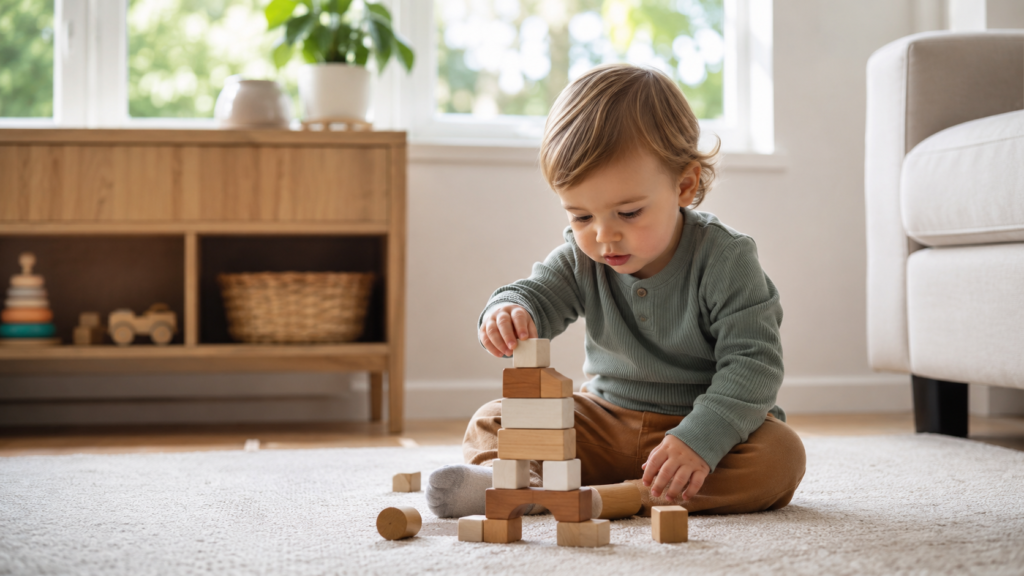
Rotation day is also your ongoing declutter. Each time you swap, ask: did anything in the outgoing box go completely untouched for two rotations running? Into the donate bag it goes. This is how you keep the toy population under control permanently, without ever needing another big declutter day.
Making it stick (the realistic bit)
- The grandparent problem. New toys will keep arriving. Adopt a loose “one in, one out” habit — when something new joins the rotation, something unloved leaves.
- Your toddler asks for a stored toy. Great — get it out and swap something back in its place. Rotation is a system, not a prison.
- You miss a rotation week. Nothing bad happens. Swap when you swap. A toy rotation that runs “roughly every couple of weeks, when I remember” still beats no rotation at all.
- Small home, no storage? Two boxes is enough. Even one hidden box — half the toys out, half away, swapped fortnightly — gives you most of the benefit.
The bottom line
Toy rotation for toddlers isn’t about minimalist-influencer perfection. It’s about a calmer living room, a toddler who plays more deeply, and a tidy-up that takes five minutes instead of ruining your evening. Declutter once, sort into boxes, swap every week or two, and quietly donate the stragglers as you go.
Start this weekend: three bags, one nap time, and be brave about the fire engine.