10 Essential Tips for Grocery Shopping and Meal Prepping Magic
The winter months bring unique challenges for working moms trying to balance career demands with providing warm, nutritious meals for their families. As temperatures drop and daylight dwindles, the last thing you want to think about after a long workday is what’s for dinner — let alone a last-minute dash to the supermarket. That’s where the magic combination of smart grocery shopping and meal prepping comes in. Get these two working together and your weeknight dinner routine goes from stressful to seamless.
Here are ten essential tips to make it happen.
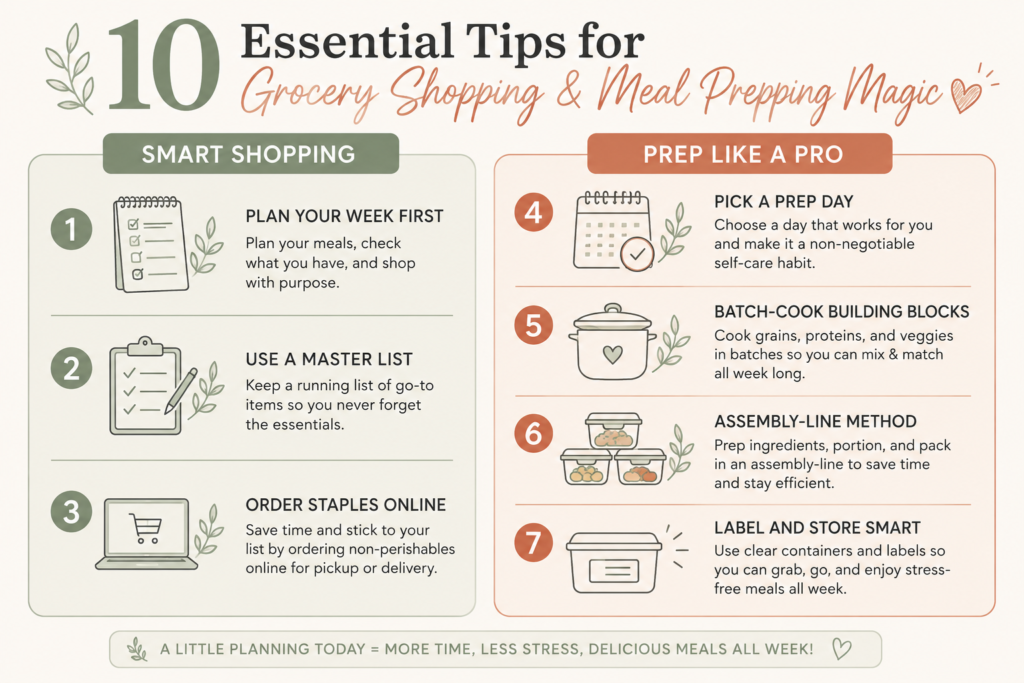
1. Plan Your Week Before You Shop
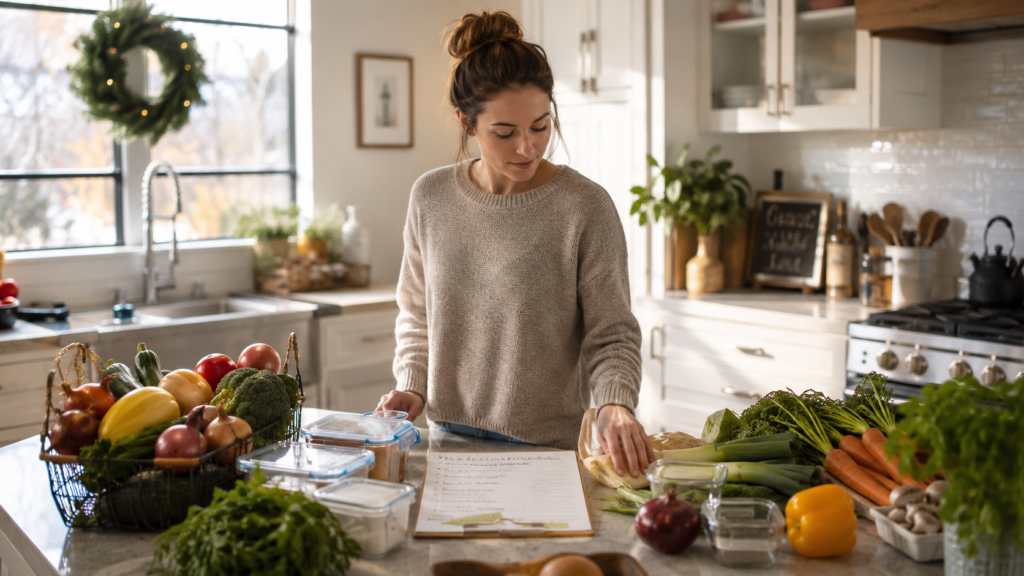
Meal prep magic starts before you ever set foot in a store. Take ten minutes to sketch out the week’s dinners, check your calendar for late meetings or after-school activities, and note which nights need something extra quick. Planning first means you buy only what you’ll actually use — which saves money and cuts food waste dramatically.
2. Shop With a Master List
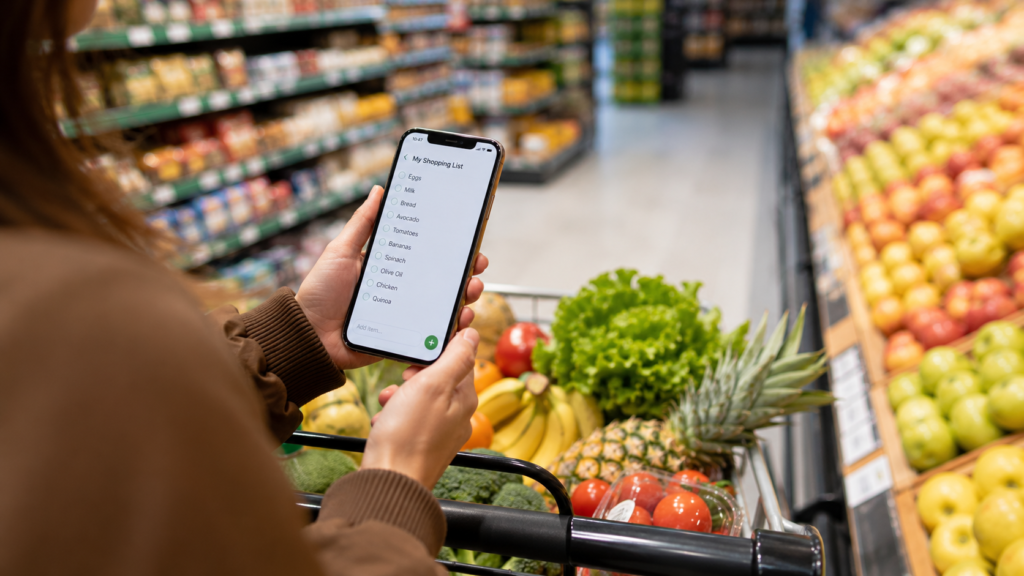
Keep a running master list of the items your family uses every week, organised by the layout of your usual store: produce, meat, dairy, pantry, frozen. Each week, you’re simply topping it up rather than starting from scratch. You’ll move through the aisles faster, forget fewer things, and be far less tempted by impulse buys.
Grab your free
Chore Chart printable
Turn everyday jobs into a star-earning game the kids actually want to do. Pop your email in and it lands straight in your inbox, plus weekly home-organisation tips for busy moms.
No spam, ever. Unsubscribe anytime.
3. Order Shelf-Stable Items Online
There’s no reason to push a trolley full of rice, pasta, tinned tomatoes and cleaning supplies around the store every week. Set up a repeat online order for shelf-stable staples and save your in-person shopping time for fresh produce and proteins, where it’s worth choosing items yourself.
4. Pick Your Prep Day — and Protect It
The key to successful meal prepping lies in choosing the right time. Many families find Sunday afternoons ideal, as it provides a relaxed window to prepare for the week ahead. If weekends are packed with activities, split your prep between two weekday evenings instead — two 45-minute sessions can feel far less overwhelming than one marathon. Whatever you choose, treat it like an appointment.
5. Stock the Right Tools
A little kit goes a long way. Essentials include storage containers in a range of sizes (glass is best for longevity and reheating), sharp knives, cutting boards and measuring cups. A food processor is invaluable for quick vegetable prep, while a slow cooker or Instant Pot can be your best friend for hands-off cooking while you get on with everything else.
6. Batch-Cook Building Blocks, Not Full Meals
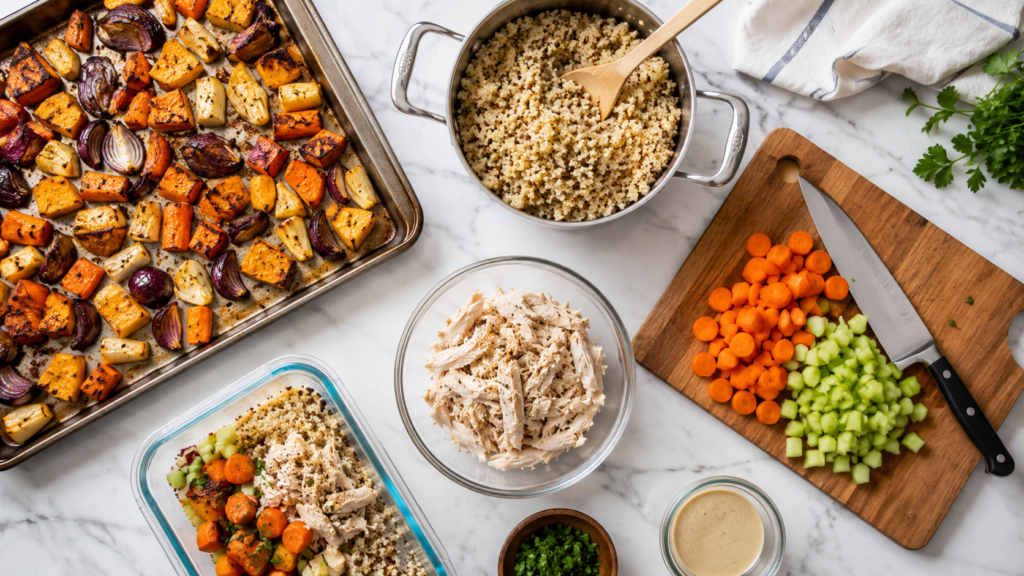
The foundation of efficient meal prep is versatile components you can mix and match all week. Shred a big batch of chicken for soups, wraps and sandwiches. Brown ground beef with basic seasonings and take it in different directions each night. Roast chickpeas for a vegetarian protein with great texture. Pre-cook grains like brown rice, quinoa and lentils, and store them in portioned containers — a splash of broth revives them beautifully at reheating time.
7. Prep Your Vegetables in One Session
Spend one focused block washing and chopping hardy vegetables like carrots, celery and onions — they’ll happily keep for several days in the fridge. Roast big trays of root vegetables such as sweet potatoes, butternut squash and parsnips; they’re perfect for winter meals and reheat wonderfully.
8. Use the Assembly-Line Method
Organise your prep session in order of cooking time: start whatever takes longest (roasting, simmering), then chop and portion while it cooks. Set up a preparation station with all your tools and containers before you begin, and batch similar tasks — chop all the vegetables at once rather than switching back and forth. If the oven’s on for chicken, slide a tray of vegetables in alongside it. If rice is cooking, steam vegetables in a basket above it.
9. Label Everything and Store Smart
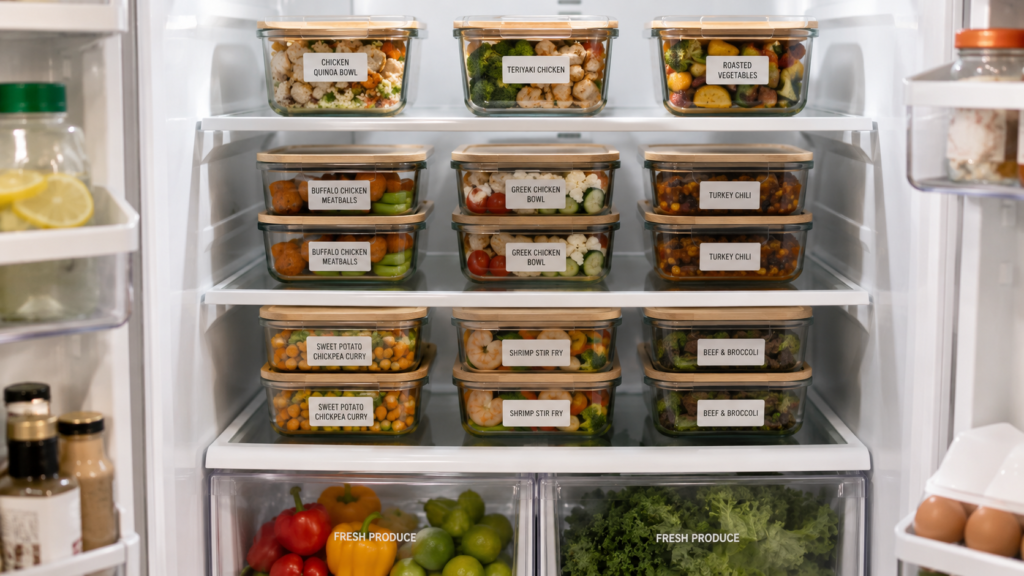
Label every container with contents and date — it keeps you organised and keeps food safe. Short on fridge space? Use stackable containers, freeze anything you won’t eat within a few days, and create a designated “prep zone” shelf so everything stays visible. To keep reheated food tasting fresh, slightly undercook vegetables destined for reheating, store sauces separately where possible, and add fresh elements just before serving.
10. Solve for Real Life
Picky eaters? Prep neutral base components — plain chicken, rice, roasted veg — and let each family member season or top their own plate. Chaotic weeks? Keep one “emergency” prepped meal in the freezer at all times. And remember: meal prepping is not about perfection. Start small, find what works for your schedule and your family, and adjust as you go.
The effort you put into smart shopping and a weekly prep session pays off every single evening — in calmer dinners, a smaller grocery bill, and more quality time with your family when it matters most.